


Insights
Featured Post
Archive
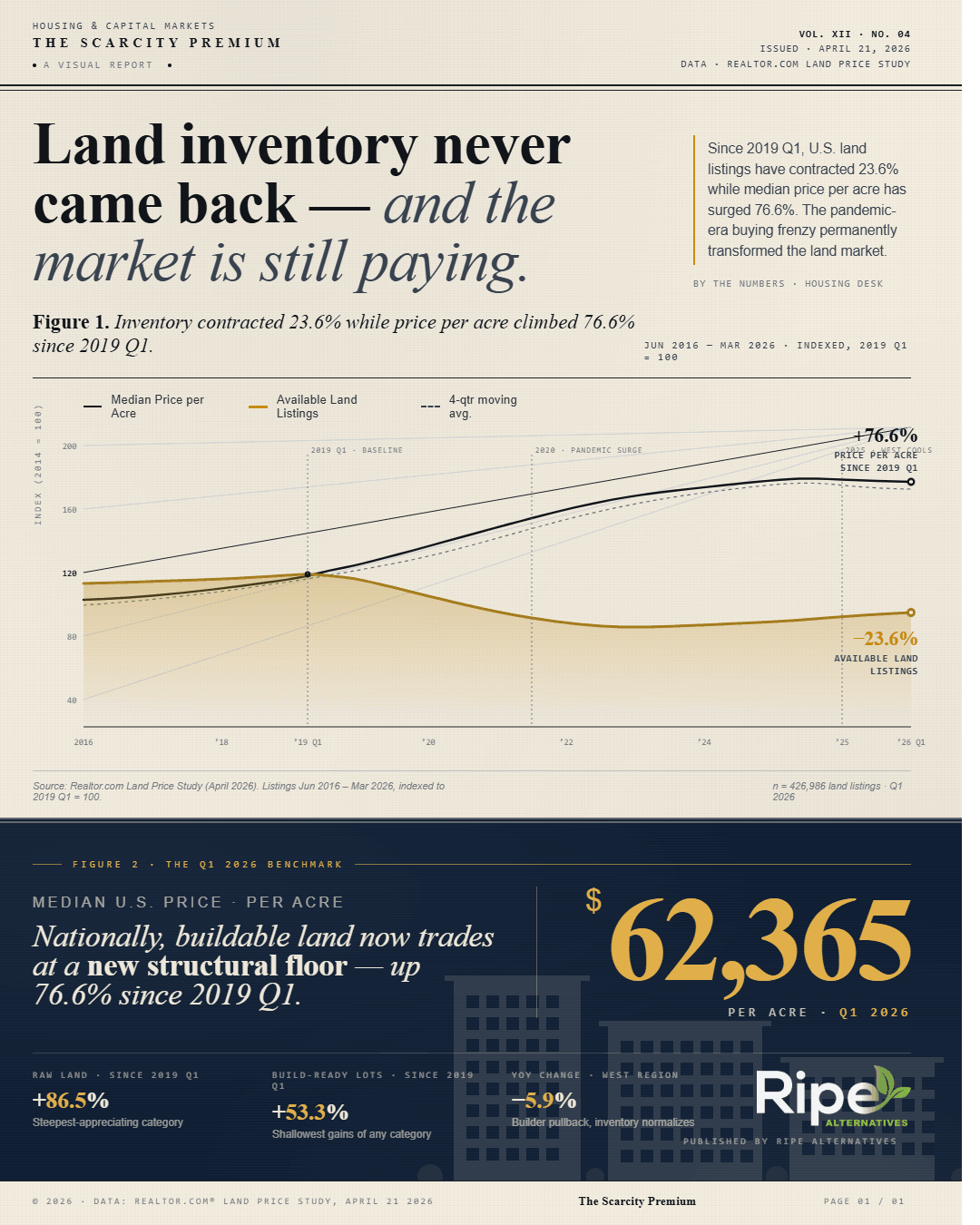
Land scarcity now plays a bigger part in the post-pandemic housing shortage.
You get your feet in position, lightly rock back and forth, adjust your grip, lock your elbow. Your form feels good, so you swing… and miss. The golf ball still sitting unbothered on the tee between your feet. What’s terrific about this situation is feedback… immediate feedback. (I still get this exact form of feedback when I play golf).
We choose “lucky” as the adjective of choice when describing people in certain winning circumstances. Examples would be those that get tickets to The Masters at Augusta, or if it’s more your thing, floor tickets to a BTS concert (when things like that were happening). I’m guessing those few people consider themselves pretty lucky too.
The value-add acquisition strategy, which we employ, entails bringing an older property back to competitive prowess, simultaneously increasing it's income potential and providing a much better living environment for our customers (our tenants). This strategy is not without risk, however.
Of the interesting characteristics defining the Covid-19 economy, one is the simultaneous worries of both deflation and inflation because there were concurrent supply and demand shocks.
Risk is something we think a lot about. A mild obsession, actually. The question that is the title to this essay should be a fast 2nd thought to the much more natural one “How are we going to make money?”
As we round out the first half of 2018, many are shifting their attention (if they haven’t already) to the tax reform that went into place at the beginning of the year. What I’ve found fascinating is that through my conversations with various tax professionals, no one is exactly sure what to expect come next spring.
Real estate investments, in general, are impacted by national trends; responding to recessions, interest rate changes, and overall optimism/pessimism. However, performance is also highly local, dependent on the employment and supply picture of the immediate area and region.
As of January 2018 there are increasingly vocal concerns about the levels of numerous markets, both domestic and international- stocks, bonds, real estate. There appears to be extended bull markets in everything and worry is rising.
Investment liquidity is doubtlessly a good thing. Yet, that doesn't mean that illiquidity is doubtlessly a bad thing. In fact, liquidity can sometimes be a curse and illiquidity can sometimes be a blessing. This is the realization felt by traders after they've participated in a panic (incidentally, it's easy to label a panic in hindsight, but very difficult to see a situation as temporary, emotional selling while it's happening and when your net worth is falling!).
A criticism when discussing the risk-adjusted returns of direct real estate, as measured by appraisal based indexes such as the NCREIF NPI, is that volatility is understated because appraisal based valuations "smooth" volatility due to their backward looking nature.
Featured Post
Archive